
Symptom guide · 4 min read
Battery and electronics: preventing problems after a battery change
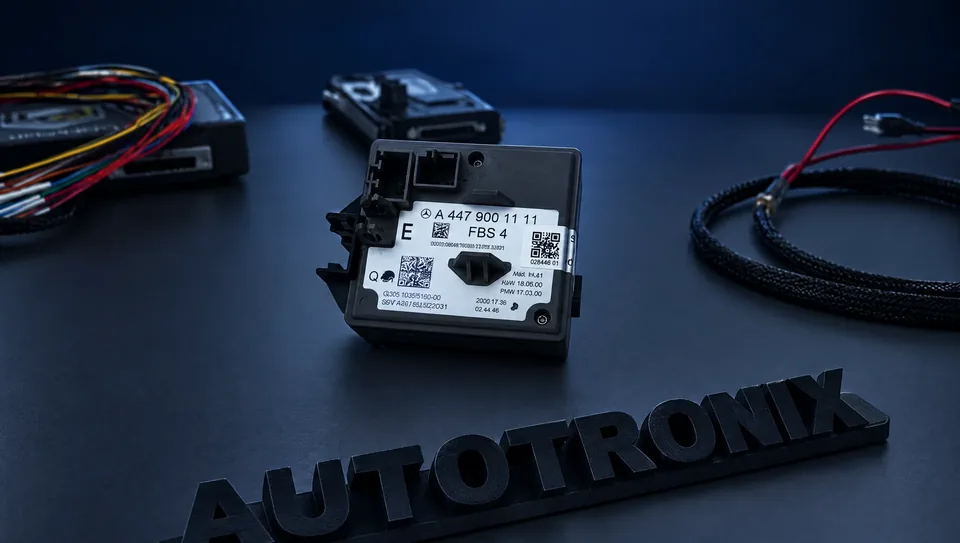
Recognise it
Typical problems after a battery change.
- 01Windows, lights or indicators stop working (BMW, MINI)
Often corrupted data in the footwell module (FRM).
Read more - 02All sorts of messages and warning lights at once
Sometimes they clear by themselves after a few drives; if they stay, the fault codes show where the problem is.
- 03
- 04The battery goes flat quickly
Something may be drawing current while the car is asleep.
Prevent it
How to prevent damage.
- 01The right type of battery
Cars with stop-start have an EFB or AGM battery, and the same type should go back in.
- 02Have the new battery registered
On many makes, a new battery has to be registered with the battery management system. Your garage does that.
- 03Charge or replace a weak battery in time
Below 12.4 V at rest, the battery needs charging.
- 04Jump start with care
The connection points are in the owner’s manual; connecting wrongly can damage modules.
What we ask first
Three questions about your battery.
What’s the resting voltage?
After a few hours standing, measured directly on the posts, 12.6 V or more is healthy.
What type of battery is it?
AGM, EFB or Li-ion is on the label. With Li-ion, the usual voltage rules don’t apply; a photo of the label tells us enough.
Does it go flat overnight?
If the resting voltage drops from above 12.6 V in the evening to below 12.4 V in the morning, something is drawing current while the car is asleep.
Only a professional works on the 48V system and the orange high-voltage cables. A swollen, leaking or hot battery is removed safely by the garage or the breakdown service.
Questions
Frequently asked questions.
Question not listed? Send us a message on WhatsApp.
01 Why has my BMW stopped working after a battery change?
On some BMWs and MINIs, a voltage dip can corrupt the data in the footwell module (FRM). Windows, lights or indicators then do nothing. That module can often be repaired, keeping your data.
02 Will the warning lights go out by themselves after a battery change?
Sometimes, after a few drives. If they stay on, the fault codes show where the problem is.
03 Do I need to have the battery registered?
On many modern cars, yes. Your garage does it with the right diagnostic equipment.
04 Can a battery change damage the ECU?
It can: a voltage spike, for example during a jump start or welding on the car, can damage the ECU. If the ECU can’t be reached afterwards, that points more to a fault in the engine management. In many cases it can be repaired.
More explainers
My car has a problem: is it electrical?
- 01
- 02
- 03
Faulty module? Request a repair.
Make, model and year · what you hear and see, and since when · the fault codes (a photo of the screen) · the battery voltage if you’ve measured it · a photo of the dashboard with the ignition on.

Sources: VARTA (measuring the battery, stop-start), ANWB (testing the battery), our own workshop experience. Accessed on 27 September 2026.